Microsoft’s October 7 Windows event gave me a clearer reason to be optimistic about AI PCs. Surface Laptop Ultra and the new NVIDIA RTX Spark laptops put substantial local compute in machines developers and creators can carry. Microsoft is connecting that hardware to software that helps decide where AI should run and controls what agents can do. I see a stronger proposition for customers who want more useful work from AI without sending every task to a cloud service. Microsoft’s announcements bring the hardware, developer tools and execution controls closer together. The opportunity is compelling, although customers need to distinguish what is available today from what is still coming.
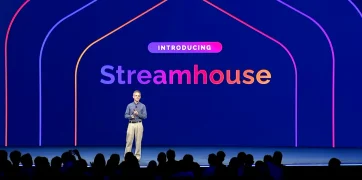
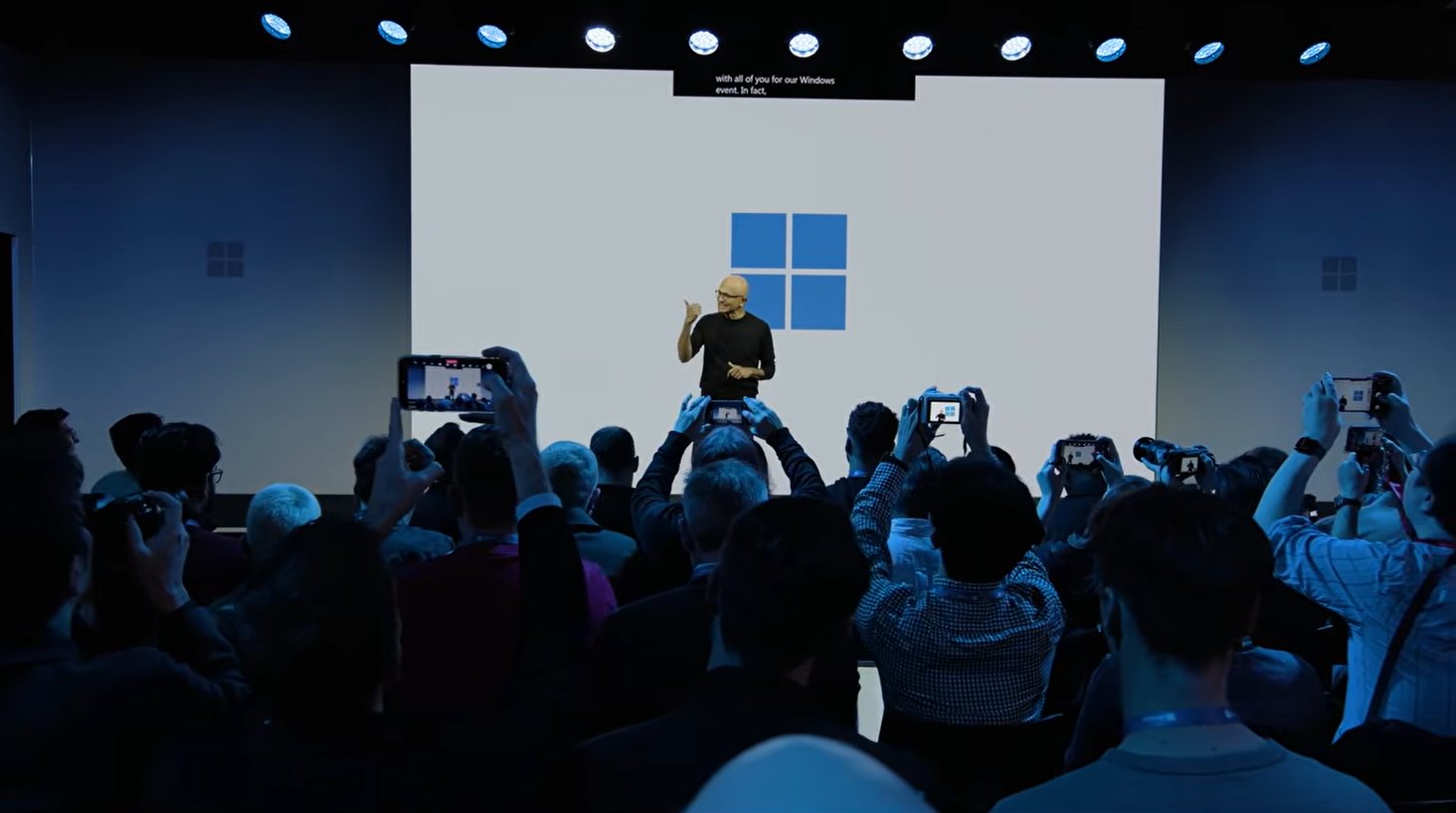
Microsoft’s Windows event in San Francisco delivered new hardware and new software for AI agents at the same time. CEO Satya Nadella opened; Pavan Davuluri, executive vice president of Windows + Devices, ran the announcements; and NVIDIA CEO Jensen Huang joined Nadella to close. I wasn’t able to attend this one, but my colleague Anshel Sag was in the room. I’ve been in and around the Windows ecosystem for most of my career, first on the OEM side at Compaq, then at AMD, and I’ve watched Microsoft try to make the PC matter in AI since the first Copilot+ PCs. The short version is that Microsoft now has the hardware and the software to do it. Pre-orders opened for the Surface Laptop Ultra, which the company calls its most powerful Surface ever, and for NVIDIA RTX Spark laptops from ASUS, Dell, HP, Lenovo and MSI. On the software side, Microsoft made its agent sandbox, Microsoft Execution Containers, or MXC, generally available on Windows 11 and said GitHub Copilot will start routing work to models on the PC. Microsoft is one of the few companies with a hand in every layer that decides how an agent runs: the PC operating system, the developer tools in GitHub, enterprise identity and the cloud.
Why RTX Spark, HydraFusion And MXC Need Each Other
Each piece needs the others. RTX Spark gives a thin laptop up to 128 GB of unified memory and up to a petaflop of AI compute, which Microsoft says is enough to run models with more than 120 billion parameters on the device. I’d like to know the tokens per second for each model discussed. The router decides which work runs there, and the sandbox decides what an agent can touch. GitHub’s HydraFusion picks one or more cloud models per task and has been in research preview since September. In an experimental preview later in October, HydraFusion will also tap models running on the PC in the GitHub Copilot app, Copilot CLI and VS Code, according to Davuluri. MXC lets an organization declare which files and networks an agent can reach, and Microsoft says MXC enforces that policy at runtime, outside the agent’s control. In my Lenovo 360 Monaco keynote on October 1, I said one router and one policy layer should send every token to the cheapest safe place. After Dell Technologies World in May, I wrote that I still had to figure out agent orchestration. Microsoft’s pairing of router and sandbox is the most concrete answer I’ve seen, and on event night I posted that intelligent, governed routing may finally be here.
My Take: Agent Work Starts Moving Back To The PC
It’s tempting to read October 7 as either a laptop launch or a software launch. My non-consensus take is that it’s one story, and it marks the start of agent work moving to the PC. The consensus still puts nearly all of that work in the cloud. Deloitte expects inference to account for roughly two-thirds of all AI compute in 2026, with almost all AI computing done mainly in giant data centers. That won’t change this year. What changed is that a Windows laptop now has the memory to run serious models and the software to decide what runs there, and Microsoft is pointing more of the work at the device. The shift extends what I called in July the architectural disconnection between the model and every other stack layer: customers pick the model, and Microsoft is positioning to own the layers around it. Having talked to CIOs and many in the tech industry, the number of tokens consumer on client versus cloud or on-prem infra is 10-30%. Your mileage may vary, of course based on workload, device and model.
Surface Laptop Ultra Leads A Broad RTX Spark Lineup
Surface Laptop Ultra is the most consequential Surface in years, because Microsoft designed it around an NVIDIA RTX Spark for local AI work. It pairs a Blackwell GPU with up to 6,144 CUDA cores and a Grace CPU with up to 20 cores, sharing up to 128 GB of unified memory. Microsoft says the laptop’s new thermal design delivers up to 2.5 times the thermal power capacity of current Surface Laptops in a chassis under 18 mm thick and under 4.5 pounds. The 15-inch PixelSense Ultra display hits 2,000 nits of peak HDR, which Microsoft says is the brightest of any laptop, and Magnetic Connect builds magnetic charging into a USB-C port, which Microsoft calls a first for a laptop. Prices run from $2,599.99 with 24 GB of memory to $5,899.99 with 128 GB, and availability begins October 16. The Surface RTX Spark Dev Box puts the same platform on a desk starting at $5,999.99, with VS Code, GitHub Copilot CLI and the Windows Subsystem for Linux preinstalled. Microsoft plans to ship it to U.S. customers in November.
The lineup goes well beyond Surface. ASUS’s ProArt P16 and P14, Dell’s XPS 16 Creator Edition, HP’s OmniBook Ultra 16, Lenovo’s Yoga 9n 2-in-1 and MSI’s Prestige N16 Flip AI+ also start shipping October 16, according to Microsoft. RTX Spark dev boxes and mini desktops are due later this year. So are deskside systems from Dell and HP built on NVIDIA’s DGX Station, which Microsoft pitches as a token factory for 32 or more simultaneous agents. The same chip runs games, too, and Microsoft says Call of Duty is coming to RTX Spark in 2027. Microsoft is aiming squarely at the MacBook Pro. It’s offering up to $1,000 for a MacBook Pro trade-in and claims RTX Spark PCs deliver up to 2.1 times faster time to first token, 4.3 times faster image generation and 6.2 times faster video generation than a 64 GB MacBook Pro 16-inch with M5 Pro. Those are Microsoft-commissioned and NVIDIA tests on preproduction hardware against the M5 Pro, not the M5 Max, so I want independent numbers From Signal65, my sister company. My colleague Jason Andersen wrote at Build in June that prying Macs out of developer and creative teams “remains unlikely near-term.” I agree that takes more than one launch, but this lineup is the strongest Windows answer yet for local AI developers, because it pairs big memory with CUDA.
Memory decides a lot how much local AI a buyer gets. Microsoft’s on-device coding model, MAI Code 1.1 Flash, peaks at 75.5 GB of memory at its full 256,000-token context, so the flagship local coding experience belongs to the 128 GB machines. NVIDIA’s upcoming Nemotron model, which Microsoft says fits over 70 billion parameters into just over 20 GB of memory, shows how local AI can reach cheaper configurations. For NVIDIA, RTX Spark puts CUDA on the Windows developer’s desk, and as I said in June, developer lock-in is the real prize. The software layer doesn’t depend on NVIDIA, though. Microsoft says it will keep partnering with NVIDIA “and other silicon vendors” (think AMD, Intel, AMD and Qualcomm). It also expects Copilot’s local context, actions and models to begin reaching Copilot+ PCs in the coming months, and it says those PCs are now more than 40% of the laptops being built for business. In March, I said the software layer, starting with the OS, had been the constraint on AI PCs. After the Copilot+ PC false start, Microsoft finally has a client story with substance, and Sag wrote that Microsoft is making a direct bid for local AI development, long a Linux stronghold. In the end I want to know the model, the good output and tokens per second.
GitHub Copilot’s Router Turns Local Compute Into A Smaller AI Bill
After AMD’s Advancing AI in July, I wrote that the token router is the most underappreciated technology in enterprise AI. In GitHub’s tests across Terminal-Bench 2.1, DeepSWE and an internal benchmark, HydraFusion came in 36% to 67% below Claude Opus 5 on estimated workflow cost, with quality between 1.5 points lower and 4.9 points higher. Andersen told TechTarget that routers “help customers save significant money.” Adding the PC extends that logic to the cheapest compute a developer already owns. Microsoft’s stated reason is budget pressure: customers’ AI needs are outgrowing their cloud budgets. In Auto mode, Copilot can weigh task context and cache state as it routes work between local and cloud models, according to Microsoft and GitHub. Microsoft AI says local model calls carry no inference charge.
Quality is the real test, because a router can’t just be a tool to cut the vendor’s compute bill, as I said in August. Microsoft’s numbers pass the first check. The on-device MAI Code 1.1 Flash is a 137-billion-parameter mixture-of-experts model compressed to 53 GB. In Microsoft’s testing, the local version scored 70.8% on SWE-Bench Verified, 500 software fixes drawn from real GitHub issues, against 72.6% for the cloud version. It scored 66.3% against 62.9% on the 89 command-line tasks of Terminal-Bench 2.1. Microsoft says routing “can offload up to 20% of workloads” but hasn’t said how it measured that. I read 20% as a starting point, because local models keep closing the gap. On my own workflows, four DGX Spark desktops running DeepSeek V4.1 Flash produced output that felt like GPT-5.6 Sol or Claude Opus 5.
Microsoft is also building a meter-reducer into its own business model. GitHub Copilot bills usage in AI credits, and GitHub says local routing will help users save them. The new Copilot charges a seat for everyday work and a meter for agent work, and Microsoft says Copilot’s Code feature will use local models to help manage token costs. Every task a router keeps on the PC stays off the meter. It’s the right trade for Microsoft: cheaper correct answers grow agent usage, and the company still sells the seat and the cloud escalations. I doubt the frontier labs love it, since every task that stays local is one their models don’t get paid for. Nobody buys tokens; they buy correct answers.
MXC Makes Agent Safety An Operating System Job
“An agent cannot be its own security authority,” wrote Logan Iyer, Microsoft’s corporate vice president of Windows Platform + Developer. That’s the architecture I argued for when NVIDIA launched its agent safety platform in September: a probabilistic system needs deterministic controls outside its reach. MXC makes that architecture a Windows primitive. Developers declare what a workload needs in one JSON schema, and MXC maps the policy to process containers on Windows 11, macOS and Linux. Windows adds what the others lack: session containers that give an agent its own account and desktop, and activity reports that show what an agent tried to reach so IT can write least-privilege policy.
GitHub Copilot, OpenAI Codex, OpenClaw, Replit, LM Studio and Unsloth already support MXC, and NVIDIA has integrated its OpenShell runtime. Microsoft lists Anthropic’s Claude Code, Perplexity, Manus and others as releasing support. In the on-stage demo, Microsoft Defender blocked a prompt injection hidden in a web page, and Windows then cut the agent’s access to SharePoint while the user kept hers. Andersen also argued at Build that MXC and the new developer configurations give IT a defensible case to standardize the client edge on Windows. My colleague Bill Curtis wrote in June that Microsoft defined the governance control point for agents. I said in June that owning the secure runtime lets Microsoft govern the agent layer the way it has governed the PC. October 7 made that concrete.
Local Routing Starts To Answer Where IP Leaks
One of the shifts I described in Monaco last week is from “is the frontier cloud secure” to “where does my IP leak.” In September, I wrote that containing agents is not containing your data. Local models start to close that gap, because work a local model handles keeps its inference on the PC. Microsoft notes that local inference doesn’t make a whole session offline, so IT should check what each harness still sends out. Nor does it change what an agent’s shell commands can reach, which is why the sandbox has to ship with the router. The limit is the cloud path: work the router escalates still exposes its traces, so confidential computing for frontier models remains the missing piece.
What Microsoft Still Has To Prove At Ignite
The architecture is right; the first release is incomplete. I’d push Microsoft on four things at Ignite in November. First, put dates on the identity and management pieces. The demo leaned on agent identity and Agent 365, yet Entra agent identity, Agent 365 controls for local agents and Intune policy for MXC are all still listed as coming soon. Second, align MXC’s public guidance with its general availability. As of October 8, the MXC repository still calls the code an early preview and says no MXC profiles “should be treated as security boundaries currently.” The repository also lists outbound allow and block rules and host filtering as not yet supported on Windows and marks the session container experimental. Third, show the math behind “up to 20%”: the share of tasks routed locally, the quality retained and the cost per correct task. If the local share stalls or quality slips, the case for moving agent work to the PC weakens. Fourth, show Claude Code and the other agents listed as releasing support running inside MXC. Enterprises shouldn’t wait for all four. Pilot MXC in learning mode on developer machines now, write policy from the activity reports, and measure routed work on cost per correct answer.
Windows Is Becoming The Agent’s Operating System
Microsoft brought the agentic PC to market as a package: the Surface Laptop Ultra and its RTX Spark peers with the memory to run serious models, a router that decides what runs on them, and a sandbox that decides what agents can touch. The laptops start shipping October 16, Microsoft plans the routing preview for later this month, and the identity and management pieces are still to come. On October 4, I asked whether this was the beginning of the on-device AI wave and said I think it is. After the event, I hold that view with more conviction. If Microsoft dates the identity pieces and shows the routing numbers at Ignite, October 7 will look like the day Windows became the agent’s operating system. This is HUGE!
I’m optimistic because the laptops now have a clearer software rationale. RTX Spark supplies local capacity and an established acceleration ecosystem. Routing can make that capacity easier to use, and containment can help organizations delegate work with more confidence. Microsoft’s opportunity is to make Windows more valuable wherever the chosen model runs.