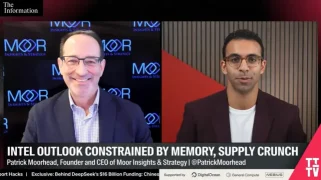
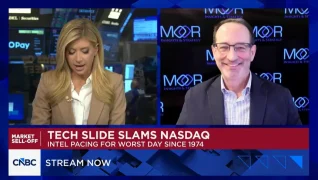
Yesterday I appeared on Yahoo Finance to discuss the specifics from AMD’s new earnings report. You can watch the video via the link below, or read on for an AI-generated, human-edited overview and summary of the full conversation.

Link to video of broadcast. (My segment starts at 18:43.)
Overview
AMD reported strong third-quarter earnings that beat analyst expectations, driven by a 97% surge in datacenter revenue, which now represents 64% of total sales. Following the report, analyst Patrick Moorhead highlighted that AMD has transformed into a datacenter-first company, avoiding the PC market weakness that impacted Intel. Key growth drivers include the rise of agentic AI, which is significantly increasing CPU demand alongside GPUs, as well as product developments like the Helios rack and the upcoming Verano chips. Potential industry headwinds remain centered on customer financing, supply chain availability, tradesperson labor shortages for datacenters, and midterm-election-related policy risks.
Outline
AMD Third-Quarter Earnings Results and Initial Reaction
- Jake Conley of Yahoo Finance recaps the news that AMD beat analyst estimates across revenue, adjusted earnings per share, and operating margins, driving the stock up in after-hours trading.
- Patrick Moorhead notes that datacenter revenue surged 97% to account for 64% of AMD’s total revenue.
- Moorhead highlights AMD’s fourth-quarter revenue guidance, which came in $860 million above Wall Street expectations.
- He asserts that the results demonstrate that AMD is now primarily a datacenter company rather than a PC-dependent firm like Intel.
AMD’s Separation from PC Market Weakness and Comparison to Intel
- Conley asks if this quarter definitively differentiates AMD from the PC sales weakness that dragged down Intel and created investor concern.
- Moorhead confirms the definitive split, adding that AMD’s manufacturing partnership with TSMC enabled effective substrate management.
- Moorhead notes that AMD executed exceptionally well despite prior market doubts, whereas Intel remains largely tied to the PC sector.
AMD Executive Call Focus Areas and AI Hardware Portfolio
- Conley inquires about the upcoming executive call and what key details Moorhead wants addressed by leadership.
- Moorhead states that he wants more clarity on how AMD stabilized its PC business, which saw growth in Ryzen mobile chips while staying flat overall against Street forecasts.
- Moorhead mentions that he will also be listening for details on Helios rack shipments and what portion of GPU revenue that platform represents.
- He notes that AMD successfully recognized revenue for Helios in the fourth quarter despite earlier analyst skepticism.
- Moorhead adds that he would like to hear AMD CEO Lisa Su discuss supply-chain capacity agreements, substrate visibility, and overall manufacturing durability.
Marketwide Growth in CPU Demand Driven by Agentic AI
- Conley asks about the transition toward agentic AI systems and how increased agent deployments will impact AMD’s CPU market potential.
- Moorhead explains that moving from simple chatbots to agentic AI has drastically shifted hardware ratios from 10-to-one GPU-heavy setups to systems needing two to four CPUs per GPU.
- He projects that this surging architectural requirement could potentially triple the size of AMD’s CPU business if supply holds up.
- Moorhead highlights the competitive standing of AMD’s current Venice chips and previews the upcoming Verano release, which features six specialized variants for different customer needs.
- He notes the irony of datacenter CPUs regaining central importance after previously being dismissed by the industry as legacy compute.
Broader AI Industry Risks, Financing, and Macro Factors
- Conley asks about lingering risks, including customer funding stability, dilution concerns, and hyperscaler capital expenditure moderation.
- Moorhead says that customer financing remains critical, though stability looks more promising following Anthropic’s S-1 filing.
- He downplays hyperscaler capital expenditure pullbacks, calling them pragmatic adjustments after years of tripling or quadrupling spend rather than a sign of universal AI trade collapse.
- Moorhead identifies physical infrastructure constraints, such as skilled labor shortages driven by fab and datacenter builders — especially Terafab — hiring electricians and other tradespeople away from the market.
- Moorhead and Conley conclude with a short discussion of how upcoming election results could create policy shifts that impact industry expansion.
Companies Mentioned
- AMD
- Intel
- TSMC
- Anthropic
- Terafab
- SpaceX