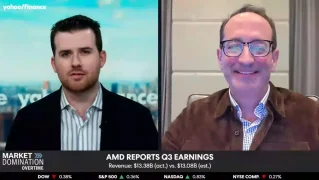
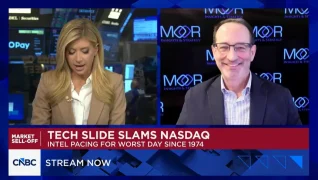
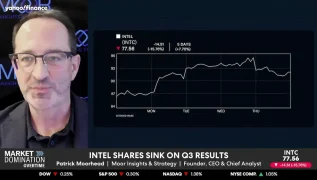
At the end of last week I appeared on CNBC’s Fast Money to discuss some of the latest happenings in the tech market, including the new Kimi K3 AI model and ongoing questions about when companies — and their shareholders — could see significant return on invested capital for the money they’ve spent on AI. You can watch an edited video of this conversation via the link below, or read on for an AI-generated, human-edited overview and summary of the discussion.

Overview
In a CNBC Fast Money interview, Patrick Moorhead, CEO of Moor Insights & Strategy, discusses market reactions to new AI models like Kimi, comparing the event to a previous “DeepSeek moment.” He suggests the market overreacted initially before stabilizing as investors processed the news. Regarding return on invested capital for AI investments, Moorhead believes significant financial returns for hyperscalers may take 18 months or longer to manifest in corporate spreadsheets. While massive capital expenditures have temporarily driven free cash flow into negative territory, he remains confident in long-term AI profitability as adoption expands to enterprise workflows and edge devices like smartphones, PCs, and robotics.
Outline
Initial Discussion on Kimi and Market Reactions
- Melissa Lee of CNBC introduces Patrick Moorhead, CEO of Moor Insights & Strategy, and asks for his perspective on the release of the new Kimi K3 model and its application to the AI sector.
- Moorhead characterizes the news as a minor speed bump and compares it to a previous DeepSeek moment involving distilled models.
- He notes that the market initially overreacted to the Kimi news before doing its research, calming down, and restoring sanity by the close of trading.
AI Investment Timelines and Capital Return Expectations
- Karen Finerman asks when investors should expect clarity about return on invested capital from hyperscalers and other market participants.
- Moorhead replies that significant financial returns might not appear for 18 months or longer.
- He highlights that hyperscalers moved from positive to negative cash flow while issuing debt to fund ongoing capital expenditures for AI.
- Moorhead notes that OpenAI maintains margins higher than hyperscalers.
Long-Term AI Adoption and Cash Flow Metrics
- Moorhead explains that AI adoption is still early, for example considering banking software that is barely tapping into its potential.
- He asserts that AI capabilities will expand further when deployed to edge devices like smartphones, PCs, and industrial robotics.
- Another panelist argues that AI is a commoditized business, making current capital spending potentially overpaid, and asks about using free cash flow as a performance metric.
- Moorhead agrees that free cash flow is the ultimate metric for measuring hyperscalers, though positive results will take a few years to materialise.
Keyword Summary
Kimi, DeepSeek, OpenAI, hyperscalers, capex, free cash flow, return on invested capital