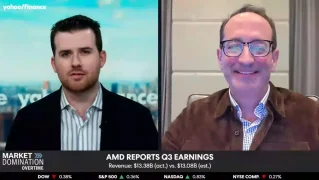
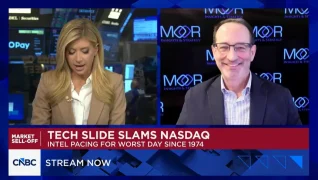
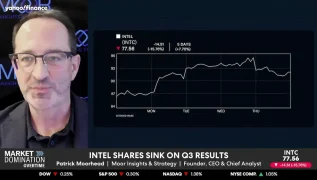
Yesterday I appeared on CNBC’s Squawk Box Asia to discuss earnings for AMD and (later this month) NVIDIA, as well as overall dynamics affecting the stock market’s reaction to developments in the tech industry. You can watch a shorter edited video of this conversation via the link below, or read on for an AI-generated, human-edited overview and summary of the longer discussion.

Overview
Patrick Moorhead analyzes the semiconductor and AI landscape following recent tech earnings reports. Despite AMD beating expectations on revenue and earnings, its stock experienced a sell-off due to timing factors around new product releases, flat gross margins, increased capital expenditures for server backends, and an ill-timed tweet from Elon Musk. Moorhead notes that NVIDIA maintains a dominant market position and strong structural advantages, including investments in robotics and infrastructure. Meanwhile, robust earnings and guidance from major cloud hyperscalers like Microsoft, Google, and AWS demonstrate that long-term artificial intelligence investments remain solid despite short-term market volatility and sentiment swings.
Outline
AMD Earnings Performance and Initial Market Reaction
- Chery Kang of CNBC welcomes Patrick Moorhead and asks about AMD price action following positive earnings results and a simultaneous tweet from Elon Musk.
- Moorhead notes that the timing of the tweet during the earnings call was suspect and contributed to disappointing stock price drops.
- He outlines AMD’s strong earnings beat and datacenter growth forecasts, also explaining that flat gross margins created unexpected market friction.
Understanding Capex Spending and AMD Product Cycles
- Kang asks Moorhead to clarify details regarding capital expenditure.
- Moorhead details that backend server capex is spent on assembly testing for compute and networking chips inside full server racks.
- Kang asks whether the tripling of expected capex means AMD is remaining in a secondary tier behind primary rival NVIDIA.
- Moorhead argues that the price drop reflects a timing mismatch related to the Helios architecture rollout rather than a structural issue.
- He also notes Lisa Su’s confidence about AMD exceeding analyst growth expectations for 2027.
Financial Horizons and Hyperscaler Profitability
- Sri Jegarajah of CNBC asks whether public markets are showing impatience over ROI and ignoring long-term technology arcs.
- Moorhead outlines two investor camps, contrasting long-term growth optimists with short-term skeptics focused on capital spending.
- Moorhead mentions recent market anxieties around DeepSeek, interest rates, and labor market shifts as sources of temporary trading chop.
- He explains that major hyperscalers like AWS, Google, and Azure are generating strong profits that validate ongoing infrastructure investments.
Market Dynamics and NVIDIA Dominance
- Jegarajah asks whether NVIDIA remains in an unassailable leadership position ahead of its upcoming quarterly report.
- Moorhead says that NVIDIA retains massive structural advantages through its balance sheet, full-stack AI solutions, and investments in robotics.
- He predicts that exponential market growth will prevent significant market-share shifts away from NVIDIA through 2026.
Investor Takeaways and Market Volatility
- Jegarajah asks how long-term investors should navigate the broader market ecosystem across hardware and software providers.
- Moorhead advises long-term investors to stay steady while short-term market sentiment experiences noise and leverage-driven swings.
- He references high-leverage hedge fund actions and social media amplification as key drivers of artificial market panics.
- Moorhead concludes by highlighting SK Hynix as an example where stellar profit growth was paradoxically met with sell-offs.
Companies Mentioned
- AMD
- NVIDIA
- Anthropic
- SpaceX
- Meta
- AWS
- Microsoft
- Situational Awareness
- Citadel
- SK Hynix
Keyword Summary
AMD, NVIDIA, Microsoft, Lisa Su, Elon Musk, SpaceX, SK Hynix, Helios, capex, data center, hyperscalers, chips, robotics