I have attended nearly every Discover event since 2013. When I covered last year’s event, I wrote that HPE was early to hybrid cloud but still assembling a full enterprise AI stack. The pieces have largely come together now, and HPE arrived in its best shape in years. Its fiscal 2026 second quarter posted revenue of $10.7 billion, up 40 percent, non-GAAP earnings per share of $0.79, up 108 percent, and cumulative AI systems bookings of $16.4 billion.
Here’s my core takeaway: HPE has the most complete agentic story it has ever told, and the strategy underneath it is right for them. What I need to resolve is how HPE’s large software stack actually gets bought and used at scale.
Juniper Is Paying Off Financially; the AI Differentiation Question Is Open
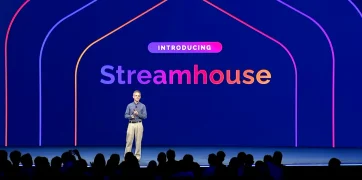
Antonio Neri put the network at the center of the keynote: every byte, token, and decision crosses it, which makes it both enabler and bottleneck for AI. I made the same point in real time. Credit where it’s earned: the $14 billion Juniper deal is paying off. Networking revenue hit $2.7 billion, up 10 percent, in HPE’s highest-margin segment, and gross margin expanded more than 800 basis points. The Q1 beat-and-raise validated the Juniper thesis, and Q2 extended it. At Discover, HPE extended its self-driving networking with new Juniper QFX switches for inference and scale-up and moved Marvis into Aruba Central.
The harder question is differentiation. President of networking Rami Rahim pitched an AI-native, self-driving network as the foundation of the AI era, and it has merit. But a lot of companies are making the same pitch. I watched Cisco position the network as the AI control plane the week before at Cisco Live, and Dell is building the same thing albeit with less networking. I have my analysts running that comparison now, because self-driving networking is becoming table stakes, not a moat. I’m not yet convinced HPE’s version is differentiated, and that’s the open question I’m watching.
Why Skipping the Neocloud Volume Game Is the Right Call for HPE
HPE is deliberately not chasing hyperscale AI server volume. More than two-thirds of the AI backlog is enterprise and sovereign; it entered the third quarter with $5.9 billion in AI systems backlog weighted to exactly those buyers. That is a margin-quality decision, a different strategy than Dell’s, and the correct one for HPE. Winning the largest neocloud and tier-one deals on price isn’t HPE’s edge; owning the enterprise and sovereign customer at high margin is. What I learned from my days at Compaq and AMD is that you need to watch just how much lower margin business gets passed up that the BOM and OPEX costs per unit skyrocket.
HPE isn’t shut out of the biggest builds, either: its Juniper switching is now in AMD’s Helios rack, a quieter route into hyperscale than competing head-on. And the prize is large: McKinsey projects nearly $7 trillion in data center capital spending by 2030, with more than $4 trillion of it on computing hardware. The orders are real. The test is turning them into sequential revenue in the back half, and the DRAM and NAND supply situation is the variable that sets the timing.
The Software Adoption Question I Need to Research
The software stack adoption specifics is where I need more clarity, I admit. I understand the capabilities at a higher level and MI&S analysts Matt Kimball and Mike Leone do the full double-click. Also, I will add that overall, GreenLake is a commercial success which includes software.
HPE has spent heavily to complete a software stack: GreenLake Intelligence with an agent registry and token-cost observability, plus Morpheus, its control plane for the VMware migration wave. EVP Fidelma Russo showed HPE running its own AI support platform on Private Cloud AI at a claimed 30-times-lower cost. I believe the value proposition. Adoption is the part I need to better understand.
The feedback I got on the floor about the one-touch path out of VMware was that it’s going well. But I didn’t see many customers on stage telling that story, and the keynote led with infrastructure, not software. My colleague Matt Kimball rates HPE’s management stack, the sleeper differentiator of the show, and lands on the point I keep coming back to: enterprises tend to lag the technology by years before they hand real operational control to software. The proof that customers buy and use it at scale is what I still want to see.
What Decides Whether HPE’s AI Bet Pays Off
I left Discover more convinced of HPE’s strategy than of its execution. That’s natural as strategy previews execution and HPE has executed so far with Juniper and profit growth. Three things decide whether the new AI bets pays off. First, those AI bookings have to convert into revenue. Second, the software stack has to show real attach and usage, not just capability on a slide. Third, network differentiation question, where I need to better understand how HPE’s self-driving network is meaningfully different primarily compared to Cisco and a smaller part, Dell.
The enterprises I talked with across this Vegas stretch are concentrating spend on fewer, harder-to-govern AI projects, which plays directly to HPE’s governance pitch. Now HPE has to turn the story and backlog into numbers.
Sources
- Patrick Moorhead, HPE Discover 2025 analysis, Moor Insights & Strategy
- Patrick Moorhead, HPE Discover 2026 keynote reaction (X)
- Patrick Moorhead, HPE Q1 FY26 earnings analysis (X)
- Matt Kimball, HPE Discover 2026: Networking Is the Star of the Show, IT Operations Is a Key Differentiator, Moor Insights & Strategy
- HPE, fiscal 2026 second quarter results
- HPE, self-driving networks across edge, campus, data center, and AI factories
- HPE, unified agentic IT operations with GreenLake and Morpheus
- McKinsey, The cost of compute: A $7 trillion race to scale data centers